A reliable internet connection is essential for modern business operations. From cloud-based applications and customer management systems to VoIP phone services and payment processing, organizations depend on uninterrupted connectivity to keep employees productive and customers satisfied.
But what happens when that connection suddenly fails?
Internet outages can occur without warning due to service provider disruptions, damaged infrastructure, equipment failures, or severe weather. For businesses relying on a single internet connection, even a short outage can interrupt operations, delay important communications, and create unexpected costs.
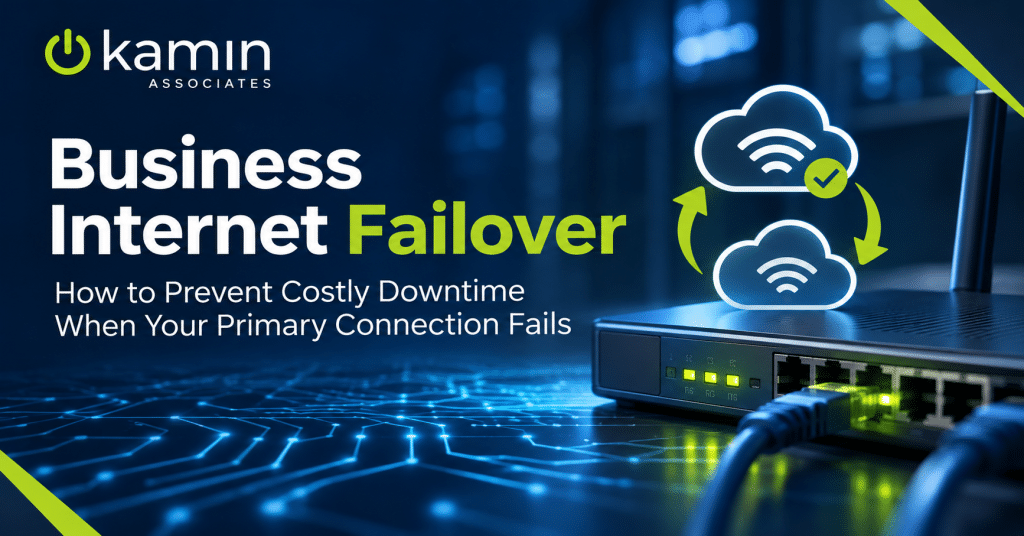
Business internet failover provides a solution by automatically switching network traffic to a backup connection when the primary connection becomes unavailable. With the right network infrastructure and redundancy strategy, businesses can minimize disruptions and maintain access to essential systems.
Understanding how internet failover works and when it makes sense for your organization is an important step toward building a more resilient IT environment.
What Is Business Internet Failover?
Business internet failover is a network configuration that allows an organization to maintain connectivity when its primary internet connection experiences an outage.
Instead of relying on one internet service provider (ISP), businesses establish a secondary connection that serves as a backup. When the primary connection fails, compatible networking equipment detects the interruption and redirects traffic through the available secondary connection.
Once the primary service is restored, the network can automatically return to its preferred connection.
Common business internet failover configurations include:
- Dual ISP connections: Two separate internet service providers supply connectivity to the same business location.
- Fiber and cable redundancy: A primary fiber connection is supported by a secondary cable internet service.
- Cellular backup connectivity: A 4G LTE or 5G connection provides temporary internet access during an outage.
- SD-WAN solutions: Software-defined networking technology manages traffic across multiple connections based on availability and performance.
The appropriate configuration depends on your organization’s connectivity requirements, budget, and existing IT infrastructure.
While failover cannot eliminate every potential network disruption, it can significantly reduce the impact of a single internet connection failure.
The Hidden Costs of Business Internet Downtime
When a business loses internet connectivity, the consequences often extend beyond temporarily losing access to websites or email.
Many essential business processes depend on cloud connectivity, making internet outages potentially expensive operational disruptions.
Lost Employee Productivity
Employees who rely on Microsoft 365, cloud-based accounting platforms, customer relationship management software, and shared applications may be unable to complete their normal responsibilities.
Even when employees remain physically present, their ability to access information, collaborate, and serve customers can be limited.
Interrupted Customer Communications
Businesses using internet-based phone systems may experience interrupted calls or unavailable communication services when their connection fails.
Organizations that depend on VoIP phone services should consider how backup connectivity can support communication continuity.
Disrupted Business Transactions
Retail operations, professional service providers, and other organizations may depend on internet connectivity to process payments, access customer records, or manage appointments.
An unexpected outage can delay transactions and negatively affect the customer experience.
Increased Recovery Costs
IT teams may need to spend additional time troubleshooting connectivity problems, coordinating with service providers, and restoring access to affected systems.
These disruptions can create costs beyond the outage itself.
For a closer look at how unreliable connectivity affects organizations, explore Kamin Associates’ article on the hidden costs of poor network performance.
How Does Automatic Internet Failover Work?
Automatic internet failover typically relies on a business-grade router, firewall, or network appliance capable of managing multiple internet connections.
The equipment continuously evaluates the availability of the primary connection using network health checks.
When those checks indicate that the primary connection is no longer functioning properly, the device redirects supported traffic through the secondary connection.
A typical failover process includes four stages:
- Monitoring: Network equipment checks whether the primary internet connection is functioning.
- Failure detection: The system identifies a connectivity problem based on configured health checks.
- Automatic switching: Network traffic is redirected through the backup internet connection.
- Service restoration: Once the primary connection is stable, the system can return traffic to the preferred connection.
The transition is not necessarily instantaneous. Some applications, including active VoIP calls and remote sessions, may disconnect during the switch.
Proper configuration, testing, and monitoring help minimize these interruptions.
Businesses should also verify that their secondary connection has enough bandwidth to support critical operations during an outage.
Internet Failover vs. Internet Redundancy: What’s the Difference?
Although the terms are often used interchangeably, internet failover and internet redundancy describe related but distinct concepts.
Internet redundancy refers to having multiple connectivity options available to reduce dependence on a single connection.
Internet failover describes the process of switching to an alternative connection when the primary connection becomes unavailable.
For example, a company might purchase internet services from two providers to establish redundancy. However, without appropriately configured networking equipment, employees may still need to switch connections manually.
Automatic failover allows those redundant connections to work together as part of a business continuity strategy.
True redundancy also requires evaluating whether the connections share common infrastructure.
Two internet services may appear independent while relying on the same physical cable pathway or upstream network equipment.
The Cybersecurity and Infrastructure Security Agency (CISA) emphasizes the importance of alternative communication pathways and redundant infrastructure in its guidance on communications network resiliency.
Although the guidance focuses on public safety communications, the underlying principles are relevant to business network planning.
Which Businesses Benefit Most From Backup Internet?
Nearly any organization that depends on cloud applications or online communication can benefit from business internet redundancy.
However, some industries face particularly significant operational consequences when connectivity becomes unavailable.
Professional Services
Law firms, accounting practices, and consulting businesses frequently rely on cloud document storage, email, scheduling platforms, and client management systems.
Backup internet connectivity helps maintain access to these essential resources.
Healthcare Facilities
Medical offices and healthcare organizations depend on reliable network connectivity for scheduling, communications, and cloud-hosted systems.
Internet redundancy can support operational continuity, although additional safeguards may be necessary for critical clinical applications.
Retail and Customer-Facing Businesses
Retailers and service businesses often rely on internet-connected payment systems, inventory management platforms, and customer communications.
A backup connection can help reduce interruptions to these everyday transactions.
Multi-Location Organizations
Businesses operating multiple offices or facilities may depend on centralized applications and cloud-based collaboration tools.
A connectivity failure at one location can disrupt access to shared resources and interfere with coordinated operations.
Organizations planning to add offices or expand operations should also consider Kamin Associates’ guide to preparing your network for business expansion.
How to Build a Reliable Business Network in San Antonio
Implementing business internet failover requires more than purchasing a second internet connection.
An effective redundancy strategy should account for the organization’s existing infrastructure, critical applications, and operational priorities.
Evaluate Your Current Network Infrastructure
Start by reviewing existing routers, firewalls, switches, internet connections, and network configurations.
Determine whether your equipment supports automatic failover and whether upgrades are necessary.
Identify Critical Business Applications
Not every application requires the same level of connectivity.
Organizations should prioritize essential services such as cloud platforms, VoIP communications, payment processing, and remote access.
This helps determine the bandwidth and performance requirements for a backup connection.
Choose an Appropriate Backup Connection
A secondary connection should provide enough capacity to support critical operations.
For some businesses, a cellular connection may be sufficient. Others may require a second wired connection from a different provider.
Where practical, using physically separate connection pathways can reduce the risk of a single infrastructure failure affecting both services.
Configure Monitoring and Test Failover
Network monitoring helps IT teams identify connectivity problems and evaluate the performance of available connections.
Regular failover testing is equally important.
A backup connection that has never been tested may not perform as expected during an actual outage.
Working with an experienced provider of IT support services can help businesses evaluate their network requirements and address configuration challenges.
How Kamin Associates Helps Businesses Reduce Network Downtime
Reliable connectivity begins with a network designed around your organization’s operational needs.
For businesses in San Antonio and the surrounding areas, Kamin Associates provides IT infrastructure services, network management, and technical support to help organizations improve reliability and reduce unnecessary disruptions.
Our team works with businesses to evaluate existing technology environments, identify potential weaknesses, and recommend practical improvements that support long-term performance.
Whether your organization needs network infrastructure upgrades, proactive monitoring, or assistance planning a more resilient connectivity strategy, having an experienced IT partner can make a meaningful difference.
A dependable business network should support daily operations while preparing your organization for unexpected challenges.
Don’t wait until an internet outage disrupts your business.
Contact Kamin Associates to discuss your network infrastructure, explore business internet failover options, and learn how our IT solutions can help keep your organization connected.