
A reliable business network is essential for keeping employees productive, applications accessible, and daily operations running smoothly. However, as businesses adopt new technologies, expand their workforce, and increase their reliance on cloud services, existing network infrastructure may struggle to keep up.
Outdated equipment, unreliable connections, and insufficient network capacity can create problems that affect productivity, cybersecurity, and long-term growth. While occasional connectivity issues may seem minor, recurring problems often indicate that underlying infrastructure needs attention.
Knowing when to invest in a business network upgrade can help organizations avoid unnecessary downtime, improve performance, and prepare for future technology demands.
Why Business Network Infrastructure Needs Regular Evaluation
Business networks support far more than internet access. They connect computers, servers, wireless devices, communication systems, cloud applications, and other technologies employees depend on every day.
As these systems evolve, network requirements change. Infrastructure designed for a smaller workforce or fewer connected devices may no longer provide the capacity, security, or reliability a business needs.
Regular evaluations help identify performance limitations, aging equipment, and potential vulnerabilities before they become larger operational problems.
As discussed in Kamin Associates’ article on the hidden costs of poor network performance, network problems can affect productivity, business operations, and overall efficiency.
7 Signs Your Business Needs a Network Upgrade
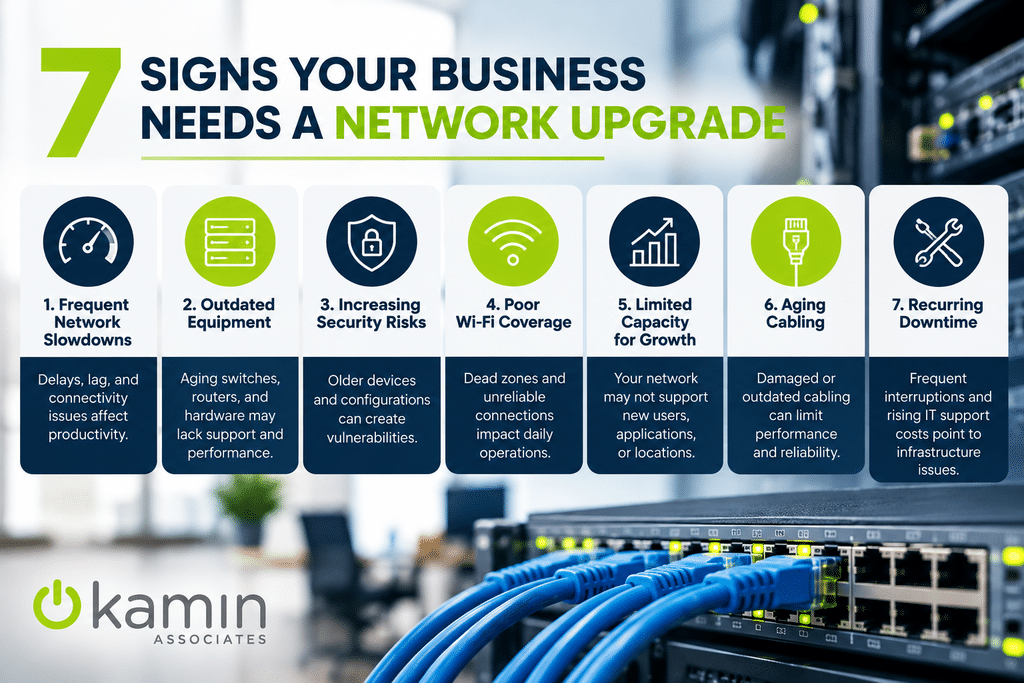
1. Frequent Network Slowdowns and Connectivity Issues
Slow network performance is one of the most noticeable signs that infrastructure may need improvement.
Employees might experience delays accessing shared files, loading cloud applications, or participating in video conferences. These problems can become especially noticeable during peak business hours when multiple users compete for available bandwidth.
While internet service limitations can contribute to slow performance, outdated networking equipment, overloaded switches, and inefficient configurations may also be responsible.
A network assessment can help identify bottlenecks and determine whether equipment upgrades, configuration changes, or additional capacity are necessary.
2. Outdated Switches, Routers, and Network Hardware
Network equipment has a limited useful lifespan. As hardware ages, manufacturers may discontinue security updates, technical support, or replacement components.
Older switches and routers may also lack the performance capabilities needed to support modern applications and increased network traffic.
Businesses should evaluate equipment based on:
- Manufacturer support and security update availability
- Current bandwidth and performance requirements
- Hardware reliability and maintenance history
- Compatibility with newer technologies
- Expected future network demands
Replacing aging equipment before it fails can help businesses avoid unexpected interruptions and improve infrastructure reliability.
3. Increasing Cybersecurity Vulnerabilities
Network security requirements continue to evolve as businesses face changing cyber threats and expanding technology environments.
Outdated firewalls, unsupported network devices, and poorly configured access controls can expose organizations to unnecessary security risks.
A business network upgrade provides an opportunity to evaluate firewall capabilities, update security configurations, improve network visibility, and implement stronger access controls.
Organizations may also benefit from separating sensitive systems from general network traffic.
Kamin Associates explains this approach in its article on how network segmentation improves cybersecurity and business continuity.
Modernizing network infrastructure helps establish a stronger foundation for ongoing cybersecurity management.
4. Poor Wi-Fi Coverage and Unreliable Wireless Connections
Wireless connectivity has become essential for offices, warehouses, healthcare facilities, and other commercial environments.
However, older wireless access points may struggle to provide consistent coverage as the number of connected devices increases.
Common warning signs include dead zones, dropped connections, inconsistent speeds, and poor performance in high-traffic areas.
These problems may result from outdated equipment, interference, building layouts, or insufficient access point placement.
A wireless network evaluation can identify coverage gaps and determine whether additional access points, updated hardware, or configuration improvements are needed.
5. Network Infrastructure That Cannot Support Business Growth
Business expansion often introduces new technology requirements.
Adding employees, opening locations, implementing cloud applications, or deploying new communication systems increases demands on existing infrastructure.
A network that performs adequately today may struggle as connected devices and data traffic increase.
Businesses planning expansion should evaluate whether their infrastructure can support additional users, applications, and locations without significant performance degradation.
Kamin Associates explores these considerations in Preparing Your Network Infrastructure for Business Growth.
Planning network improvements before expansion helps businesses avoid unnecessary complications during periods of growth.
6. Aging or Disorganized Network Cabling
Network performance depends on more than routers, switches, and wireless equipment. The physical cabling connecting these systems also plays an important role.
Damaged cables, outdated wiring, poorly labeled connections, and disorganized network closets can complicate troubleshooting and limit infrastructure improvements.
Businesses operating in older facilities may have cabling systems that were installed before current technology requirements existed.
Modern structured cabling provides an organized foundation for connecting network equipment, workstations, wireless access points, and communication systems.
Upgrading cabling where necessary can improve reliability, simplify maintenance, and support future infrastructure changes.
7. Recurring Downtime and Rising IT Support Costs
Occasional technical problems are unavoidable, but recurring network outages may indicate deeper infrastructure issues.
If employees regularly lose access to applications, experience connection failures, or require repeated troubleshooting, temporary fixes may no longer be sufficient.
Frequent support requests can also increase operational costs by consuming IT resources and interrupting employee productivity.
Rather than repeatedly addressing individual symptoms, businesses should investigate whether aging hardware, capacity limitations, or infrastructure design problems are contributing to ongoing disruptions.
A targeted network upgrade may provide a more sustainable solution than continued reactive maintenance.
What Does a Business Network Upgrade Include?
A network upgrade does not always require replacing every component. The appropriate improvements depend on the organization’s existing infrastructure, performance requirements, and business goals.
Common upgrades include replacing outdated routers and switches, improving wireless coverage, updating firewalls, expanding network capacity, and modernizing cabling.
Businesses may also need configuration improvements, additional network segmentation, or more effective monitoring.
Kamin Associates provides structured cabling services for new construction and existing buildings, including Cat 6 and fiber optic installations.
How to Plan a Network Upgrade Without Disrupting Business Operations
Successful network modernization begins with understanding the existing environment.
Before implementing changes, businesses should document current equipment, identify performance issues, and establish clear objectives.
Prioritizing critical improvements helps organizations address immediate risks while planning additional investments around available budgets.
Whenever possible, upgrades should be scheduled during lower-activity periods, with appropriate backups, configuration documentation, and rollback procedures in place.
Testing connections, applications, and security settings after implementation helps verify that updated infrastructure functions as expected.
Modernize Your Business Network With Kamin Associates
An aging business network can affect everything from employee productivity to cybersecurity and operational reliability. Identifying infrastructure limitations early allows organizations to make informed improvements before recurring problems become costly disruptions.
Kamin Associates helps San Antonio businesses maintain reliable technology through managed IT solutions, infrastructure management, network security, and structured cabling services.
Whether your organization is experiencing network performance issues, replacing outdated equipment, or preparing for expansion, the right infrastructure improvements can support more dependable operations.
Ready to improve your business network? Contact Kamin Associates to discuss your infrastructure needs and explore solutions designed to support your business.