Every device connected to a business network represents a potential security risk. From employee laptops and smartphones to printers, security cameras, and third-party equipment, organizations must manage an expanding collection of connected technology.
While firewalls and antivirus software provide important protection, they do not necessarily determine whether a device should be allowed onto the network in the first place.
That’s where network access control (NAC) becomes valuable.
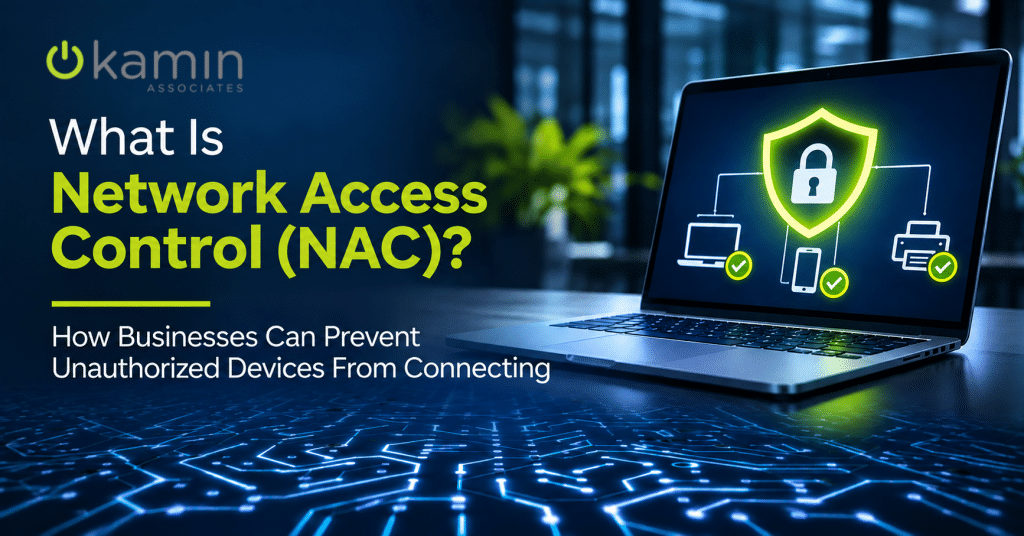
Network access control helps businesses identify, authenticate, and manage devices attempting to connect to their networks. By restricting unauthorized access and enforcing security policies, NAC strengthens business network security and reduces exposure to cyber threats.
For organizations investing in managed network security services, understanding NAC is an important step toward building a more secure IT infrastructure.
What Is Network Access Control (NAC)?
Network access control is a cybersecurity technology that regulates which devices can connect to a company’s network and what resources those devices can access.
Rather than automatically trusting every connected device, NAC evaluates whether a device meets established security requirements before granting access.
Depending on the organization’s configuration, these requirements may include:
- Valid device or user authentication
- Approved operating systems
- Current security patches
- Active endpoint protection
- Compliance with company security policies
- Proper device registration
Devices that fail these checks may be denied access, assigned restricted permissions, or placed into a separate network environment.
NAC is particularly useful for businesses managing multiple locations, hybrid workforces, guest networks, and large numbers of connected devices.
How Does Network Access Control Work?
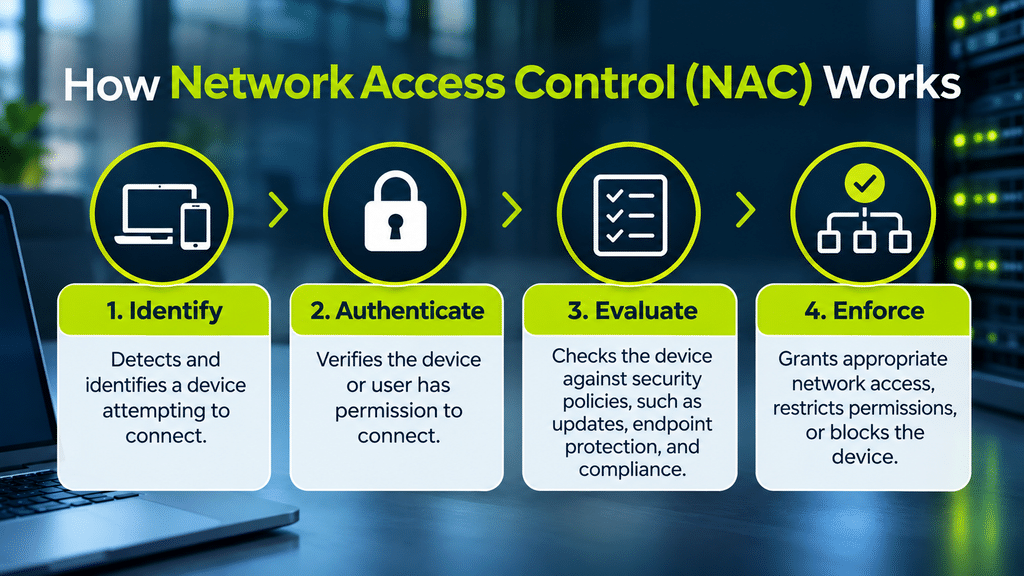
A network access control solution typically combines device identification, authentication, policy evaluation, and access enforcement.
1. Device Identification
When a device attempts to connect, the NAC system identifies it using available information such as device credentials, certificates, and network characteristics.
This helps IT administrators distinguish authorized company equipment from unknown or unmanaged devices.
2. Authentication and Authorization
The system determines whether the device or user has permission to connect.
Depending on the infrastructure, NAC may use technologies such as IEEE 802.1X authentication, RADIUS servers, and certificate-based authentication.
3. Security Policy Evaluation
Some NAC solutions evaluate device security posture, including operating system updates, endpoint protection, and configuration compliance.
A device that fails the organization’s requirements may receive limited access until the issue is corrected.
4. Network Access Enforcement
After evaluation, NAC applies the appropriate access policy.
For example, an approved employee laptop might receive access to business applications, while a visitor’s device is restricted to guest internet connectivity.
This process helps organizations enforce consistent security policies without relying entirely on manual device management.
Why Unauthorized Devices Create Business Security Risks
Many businesses underestimate how frequently unfamiliar devices connect to their networks.
Employees may bring personal laptops into the office, contractors may connect temporary equipment, or departments may install internet-connected devices without notifying IT.
These situations can create security gaps.
Unmanaged Devices
Personal or contractor-owned devices may lack company-approved security software, patches, or monitoring.
If compromised, these devices could expose other systems to malicious activity.
Shadow IT
Unauthorized technology purchases and installations can introduce equipment that IT administrators do not know exists.
Kamin Associates discusses the importance of identifying these systems in its article, Why Every Business Needs an IT Asset Inventory Before the Next Cyberattack.
Inadequate Guest Network Security
Visitors and vendors sometimes require internet access, but they rarely need access to internal servers, financial systems, or employee workstations.
Without appropriate restrictions, guest connectivity can introduce unnecessary exposure.
Outdated Connected Equipment
Printers, security cameras, and other internet-connected devices may operate with outdated firmware or limited security capabilities.
Network access control helps organizations manage these risks by applying connection policies appropriate to different device categories.
Network Access Control vs. Firewalls vs. Network Segmentation
Although these technologies support business network security, they serve different purposes.
Network access control determines whether devices should connect and what network permissions they receive.
Firewalls inspect and regulate network traffic according to established security rules.
Network segmentation divides networks into smaller sections to limit unnecessary communication between systems.
For example, NAC may authenticate an employee laptop and assign it to an appropriate network segment. Firewall policies then control which resources that segment can reach.
These technologies complement one another rather than serving as replacements.
For additional information, read Kamin Associates’ article on How Network Segmentation Improves Cybersecurity and Business Continuity.
Five Benefits of Network Access Control for Businesses
1. Prevent Unauthorized Network Access
NAC helps prevent unknown or unapproved devices from automatically receiving access to business resources.
This reduces opportunities for unauthorized connections and supports stronger network security policies.
2. Improve Visibility Into Connected Devices
Businesses need accurate information about which devices are using their networks.
NAC can provide device identification and connection activity data, helping IT teams investigate unfamiliar equipment and maintain better oversight.
3. Strengthen Bring Your Own Device Security
Organizations allowing employees to use personal devices must balance convenience with security.
NAC can apply different permissions to company-managed and personally owned equipment, reducing unnecessary exposure.
4. Support Compliance Requirements
Businesses operating under industry-specific security requirements often need documented access policies and stronger control over sensitive systems.
NAC can support these efforts through authentication, policy enforcement, and access activity records.
However, implementing NAC alone does not establish regulatory compliance.
5. Reduce the Risk of Security Incidents
By restricting unauthorized connections and limiting access for noncompliant devices, NAC reduces potential entry points into business networks.
The Cybersecurity and Infrastructure Security Agency (CISA) identifies network access control as a technology capable of enforcing device compliance policies, including blocking or quarantining devices that fail security requirements.
Signs Your Business Needs Stronger Network Access Controls
Not every organization requires the same NAC architecture, but certain warning signs indicate that existing network access policies deserve closer attention.
Consider evaluating your network security if:
- Employees regularly connect personal devices to company Wi-Fi.
- Contractors and vendors require access to internal networks.
- IT cannot reliably identify every connected device.
- Guest wireless networks are not properly isolated.
- Multiple locations operate under inconsistent security policies.
- Unmanaged devices frequently appear during network scans.
- Your organization handles sensitive customer or financial information.
These issues do not automatically mean a business needs a particular NAC product. However, they suggest opportunities to improve device authentication, access policies, and network visibility.
How a Network Security Assessment Identifies Access Control Gaps
Before implementing network access control, businesses should understand their existing infrastructure.
A comprehensive network security assessment can examine:
- Network architecture and connected equipment
- Device authentication methods
- Wireless network configurations
- Guest and contractor access
- Existing segmentation policies
- Endpoint security requirements
- Network monitoring capabilities
The assessment can help determine whether NAC is appropriate and which infrastructure upgrades may be necessary.
For example, older switches or wireless equipment may not support the authentication and enforcement capabilities required for a particular NAC deployment.
Organizations should also consider devices that cannot support modern authentication methods, including certain printers and industrial equipment.
Kamin Associates explains the value of infrastructure visibility in How Does Network Scanning Help Assess Operations Security?.
By evaluating existing technology before purchasing additional security solutions, businesses can make better-informed investments.
Strengthen Business Network Security With Kamin Associates
Effective network security requires more than protecting systems after devices connect. Businesses also need clear policies governing which devices receive access and how those connections are managed.
Network access control provides another layer of protection by supporting device authentication, policy enforcement, and restricted network access.
However, NAC works best alongside firewalls, endpoint security, network segmentation, and ongoing monitoring.
At Kamin Associates, we help businesses strengthen their IT environments through professional IT security services, infrastructure management, network monitoring, and technology support.
Whether your organization is expanding its network, supporting additional devices, or evaluating existing security controls, understanding your current access policies is an important starting point.
Contact Kamin Associates to discuss your business network security needs and identify opportunities to improve network access protection.